
Connected in Care
Insights from the Eating Disorder Provider Education Network
-
Weight Alone Is Not Enough in Eating Disorder Assessment
Weight is useful information, but it is not the whole assessment for a possible eating disorder. A current weight does not tell you how much someone has lost, how quickly that change occurred, what their eating and exercise patterns look like, or whether they are experiencing medical complications. Looking at current weight in isolation can…
-

What New ARFID Research Is Teaching Us About Treatment
Research on avoidant/restrictive food intake disorder (ARFID) has expanded since the diagnosis was introduced in the DSM-5. However, the treatment literature for ARFID is still behind the research for other eating disorders. What does the treatment research show? Recently, there has been a randomized clinical trial aiming to offer stronger treatment evidence. The study compared…
-
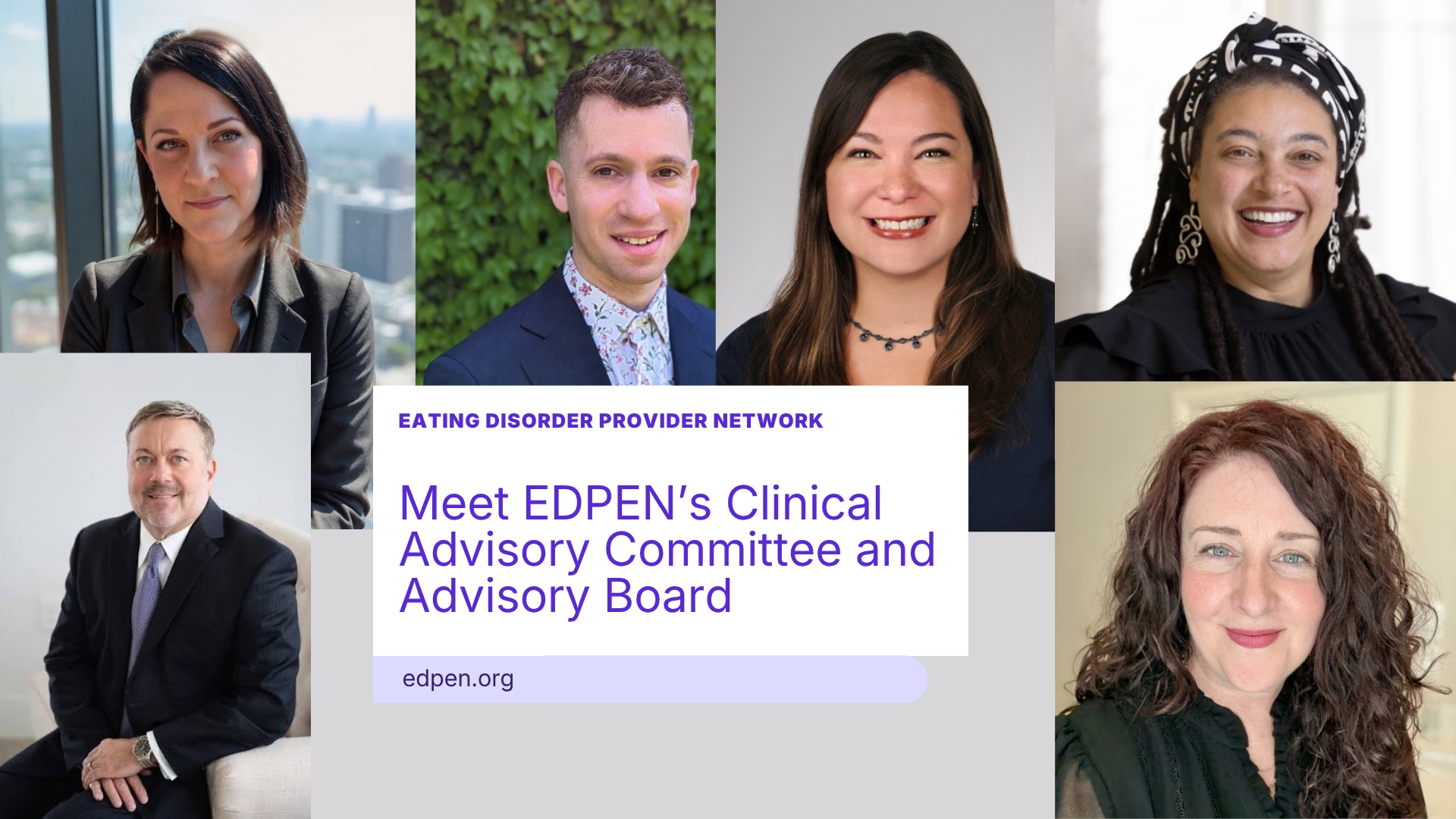
Meet EDPEN’s Clinical Advisory Committee and Advisory Board
EDPEN’s work is grounded in clinical education, collaboration, and practical resources for healthcare providers. Our Clinical Advisory Committee and Advisory Board bring additional expertise and perspective to our work. Clinical Advisory Committee The Clinical Advisory Committee includes professionals with backgrounds in eating disorder treatment, adolescent health, psychiatry, psychology, nutrition, and research. Rebecca DeHamer, MS, RD…
-
Eating Disorder Recovery, Support, and What Providers Can Actually Change
Ask most clinicians what a patient with an eating disorder needs, and “a good support system” appears somewhere near the top of the list. It is one of those phrases that sounds like a clinical recommendation and behaves like a hope. It’s vague in what it means, who is meant to build it, or what…
-
The Importance of Eating Disorder Education in Crisis Intervention Training
A young person experiencing a behavioral health crisis may be first noticed by anyone who they spend time with, not just a specialist. It could be a teacher, coach, first responder, school counselors, therapists, parents, or other community members. These individuals all have the opportunity to recognize concerns early and help connect youth with appropriate…
-
Eating Disorders Don’t Stay in Specialty Care
Most healthcare providers can probably remember a patient who left you wondering if something else was going on. The labs looked normal enough. The symptoms did not quite fit together. The patient mentioned ongoing stomach issues, chronic fatigue, anxiety, or an injury that was taking longer than expected to heal. Maybe they seemed uncomfortable when…
-
Four Steps to Making an Eating Disorder Referral That Works
You notice the signs. You have a clinical suspicion, maybe a strong one. And then comes the part nobody really trained you for: what do you actually say? How do you bring it up without alarming the patient, triggering defensiveness, or watching them nod politely and never follow through? Why Referrals Fail (And Why It…
-
Understanding Relative Energy Deficiency in Sport (REDs) and the Role of Eating Disorder-Informed Care
Athletes are often celebrated for their discipline, commitment, and ability to push beyond perceived limits. Dedication is closely tied to behaviors such as increased training volume, careful attention to nutrition, and pursuit of performance goals. However, when the demands placed on the body consistently exceed the energy available to support health and daily function, the…
-
The Trauma–Eating Disorder Connection
Understanding the Impact of Early Abuse on Severe Eating Disorders Eating disorders are often misunderstood as being primarily about food, weight, or appearance. These elements rarely tell the full story, especially in individuals with histories of severe trauma. A growing body of research highlights a powerful connection between early adverse experiences, including abuse and neglect,…
-
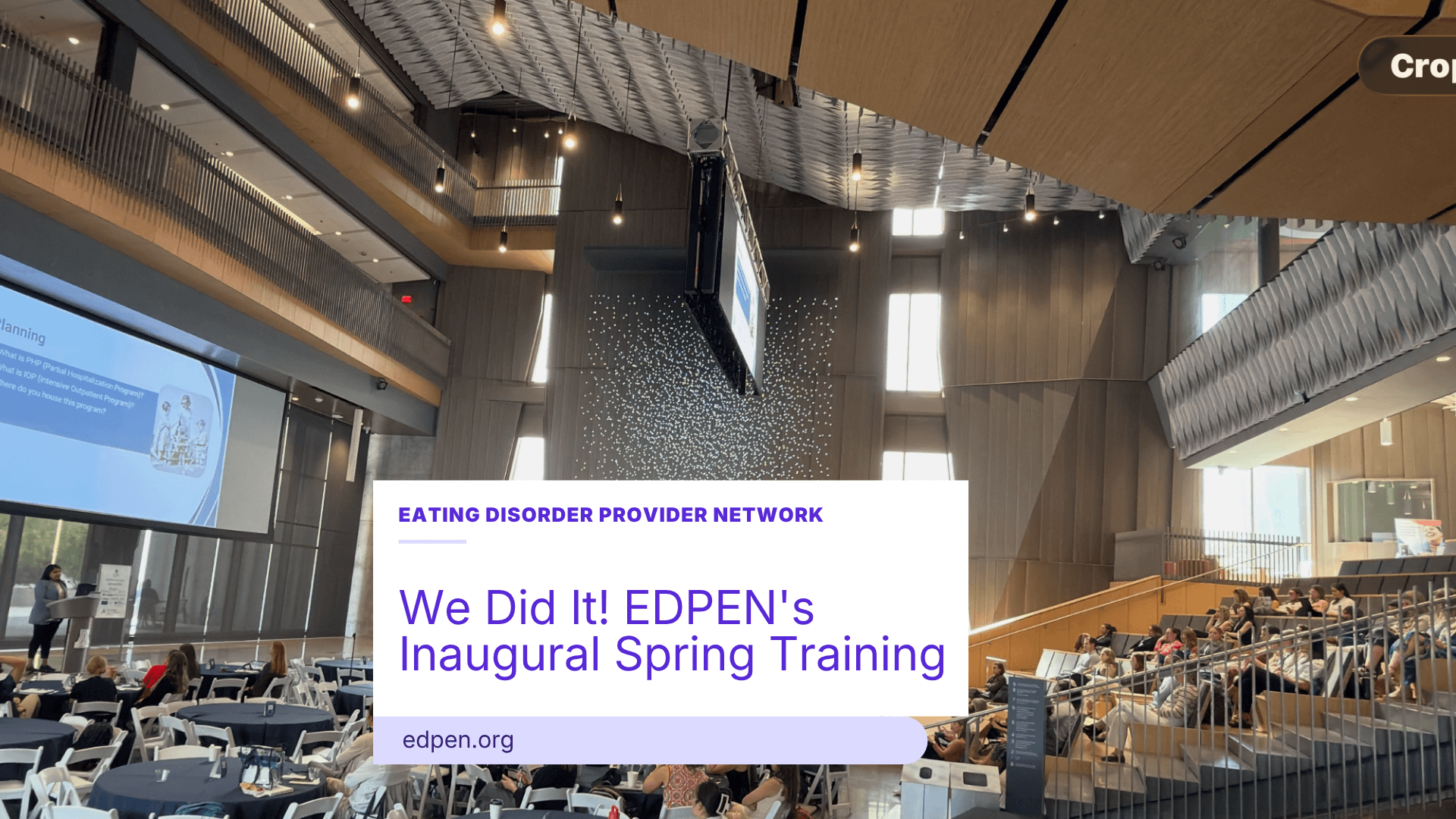
We Did It! EDPEN’s Inaugural Spring Training
EDPEN held its inaugural Spring Training at the University of Arizona, Tucson, and it was everything we hoped it would be. 115 providers from across the United States gathered for two days of immersive, interdisciplinary eating disorder education. Primary care physicians, nurse practitioners, dietitians, therapists, social workers, and recovery coaches came together to collaborate and…