

A young person experiencing a behavioral health crisis may be first noticed by anyone who they spend time with, not just a specialist. It could be a teacher, coach, first responder, school counselors, therapists, parents, or other community members. These individuals all have the opportunity to recognize concerns early and help connect youth with appropriate support.
Oregon’s first Youth Crisis Intervention Team (Youth CIT) training focused on this collaboration. Hosted by the High Desert Crisis Intervention Team, the training brought together professionals from across disciplines to strengthen youth crisis response and improve outcomes for children and adolescents. The training provided specialized curriculum focuses on adolescent brain development, trauma-informed care, school-based crisis response, and the specific de-escalation techniques required when engaging with minors.This class consisted of educators, bus drivers, community resource providers, and law enforcement professionals.
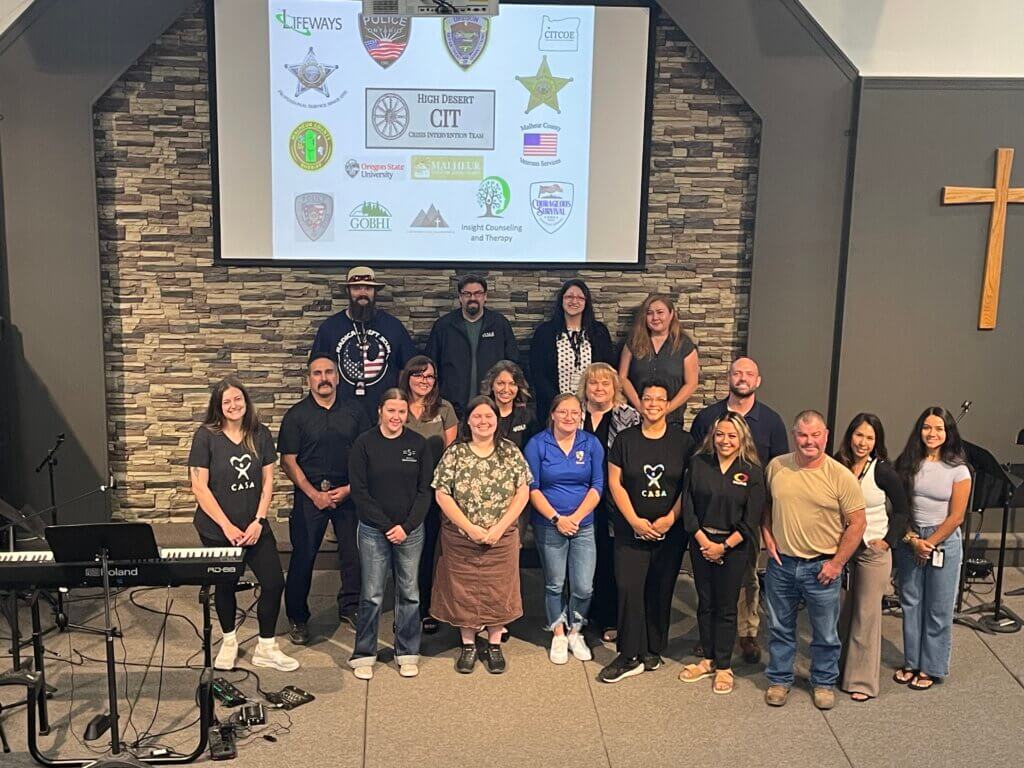
Eating Disorder Education in Crisis Intervention Training
EDPEN was honored to contribute to this historic training by leading a session on eating disorder recognition and response, led by EDPEN Cofounder Katie Grubiak.
Katie’s presentation introduced participants to the prevalence and impact of eating disorders, explored the biological, psychological, and social factors that contribute to these illnesses, and discussed why eating disorders carry significant medical risk. She also shared practical guidance on how to recognize potential warning signs, ask supportive questions, and respond in ways that encourage connection to appropriate care.
Eating disorders are difficult to navigate and can be uncomfortable to bring up in order to open the conversation. The conversations become easier when you know what to look for, how to be curious, and recognize how important it is to step in. While most participants were not eating disorder specialists, they are often among the first people to notice when something isn’t right.
No One Responds to a Youth Crisis Alone
As High Desert Crisis Intervention Team Coordinator Kailee Evans shared,
“In Malheur County, we understand that a crisis doesn’t happen in a vacuum. It affects families, schools, and the entire community. By launching the first youth-focused CIT training in Oregon, we are equipping our crisis responders with the specialized tools they need to divert youth from the justice system and toward the healing and support they deserve.”
Thank you to the High Desert Crisis Intervention Team, the Oregon Center on Behavioral Health and Justice Integration, Treasure Valley Community College, and the many agencies that helped make this training possible. Their commitment to collaboration is helping create stronger, more informed responses for youth experiencing behavioral health crises.
To learn more about Crisis Intervention Team programs, visit CIT International, the Oregon Center on Behavioral Health and Justice Integration’s Crisis Intervention Team Center of Excellence, or NAMI’s resources on Youth CIT. If you have any questions for High Desert CIT or would like to participate in future classes, you can contact Kailee at kailee.r.evans@doc.oregon.gov.
If your organization is interested in eating disorder education or customized training opportunities, contact info@edpen.org to learn more about EDPEN’s programs.