
Eating Disorder Provider Education Network
We educate professionals new to eating disorder treatment and advance the skills of those who already treat through a framework called Structured Recovery.
Equipping Providers with a Clear Process to Support Faster, Stronger Healing
Most patients with eating disorders are seen by providers who were never trained to treat them. EDPEN equips non-specialist clinicians across disciplines to recognize eating disorders and know what to do next, especially in rural and underserved communities.
What makes professional education through EDPEN so unique?
- We teach clinicians what to do during the weeks, months, or years before specialty care is available.
- Family-centered care is built in: research shows involving caregivers and loved ones in care supports strong recovery.
- Tailored for your setting– we offer a variety of programs from self-paced videos to immersive in-person trainings and live consultation groups.
- Trauma-informed and culturally sensitive—reflecting the diverse realities of the people you serve.


Recognize. Respond. Refer.
Specialty eating disorder care is often limited or delayed, meaning frontline providers must be able to respond, not just refer. Many clinicians are capable of this work; they simply have not been trained to do it confidently. Contact us to register your group today.
- 2-day in-person training- Orange County, CA April 2027
- Virtual site-specific, clinical care team training
Follow Our Journey
We’re quickly growing the range of education opportunities we provide. Don’t miss the next one—get on our email list!
We’re coming to Orange County, CA!
April 16-17, 2027
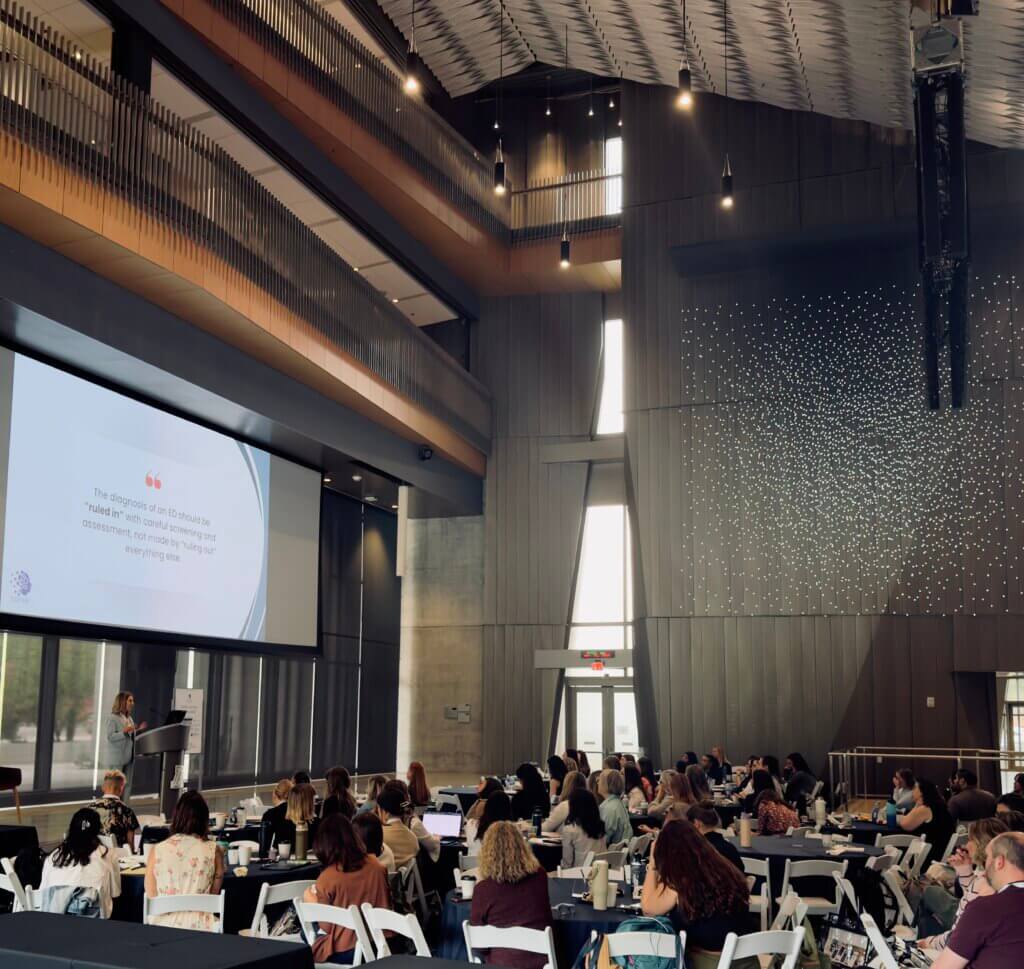
2 days of immersive training for medical, therapy, and nutrition providers and students.
A Standout Experience
Where the usual conference stops—and the real learning begins
Perks
Lunch and snacks included. $189/night hotel. Earn your EDPEN-TIP™ (Trained and Informed Provider) badge.
Leave with advanced skills—and a group of providers who learned them right alongside you.
Spring 2027 EDPEN Institute
Sponsored by : 
April 16-17th | DoubleTree Irvine Spectrum
Orange County, California
Join us for our next national training event in Southern California:
We welcome medical and behavioral health providers who are looking to build greater confidence in caring for patients with eating disorders. Whether you are new to this work or seeking to deepen your expertise, this training is designed to provide actionable, education you can immediately apply in your clinical practice rooted in the evidence base of involving families in treatment. If you are on the list below then this training is for you!
- Primary care providers, physicians, pediatricians
- Nurses, PAs, and NPs
- Dietitians and mental health professionals who are new to eating disorders
- Dietitians and mental health professionals who already treat eating disorders but want to incorporate a Family-Based Treatment (FBT) approach to their toolbox
- Residents, students and interns
A hands-on experience that goes beyond lectures. Our trainings are interactive, connection-focused, and rooted in real clinical application.
Sponsors and exhibiting: If you are interested in receiving information about sponsoring this event please email info@edpen.org.

Together we can address the treatment gaps
- Overall, only about 20% of eating disorders seen by outpatient providers are accurately detected and diagnosed.
- An estimated 77-80% of people with eating disorders never receive treatment.
- Many patients, especially those in rural or underserved locations, must travel out of state to access higher levels of care due to a lack of local specialists.
The lack of trained providers is a critical public health issue that leads to delayed diagnoses, inadequate care, and contributes to the high mortality associated with eating disorders.

Empowering Rural Healthcare Teams
Everyone deserves timely, high-quality eating disorder care, regardless of where they live.
For many people living in rural communities, that is not the reality.
Rural healthcare systems often face unique challenges, including fewer healthcare providers, long travel distances, limited specialty services, higher costs, and barriers that make it harder for patients to seek care. These challenges can delay diagnosis and treatment, increasing the risk of serious medical and psychological complications. [1,8]
Because eating disorder specialists are often unavailable or located hours away, primary care providers and other frontline healthcare professionals frequently become the first—and sometimes only—healthcare professionals a patient will see. [2]
Yet many clinicians receive little or no formal training in eating disorder care. Without specialized education, eating disorders may go unrecognized, particularly in patients who do not fit outdated stereotypes about who develops these illnesses. [3]
Some healthcare providers may also hesitate to screen for eating disorders if they believe specialty treatment is unavailable, leaving patients without the opportunity for early intervention. [4]
Although telehealth has expanded access to care in many areas, it is not a complete solution for every rural community. Limited broadband access, unreliable internet or cellular service, privacy concerns, and stigma can still make virtual treatment difficult or inaccessible for many patients and families. [5]
At EDPEN, we believe geography should never determine whether someone receives lifesaving care.
That is why we focus on equipping frontline healthcare professionals—not just specialists—with the knowledge, clinical judgment, and confidence to recognize eating disorders early, respond safely within their scope of practice, and connect patients with additional resources when needed.
Expanding eating disorder expertise across rural healthcare teams means more patients can receive timely, evidence-informed care close to home. By strengthening the skills of the providers already serving these communities, we can reduce delays, support families sooner, and improve access to care where it is needed most.
View references
- Douthit N, Kiv S, Dwolatzky T, Biswas S. Exposing some important barriers to health care access in the rural USA. Public Health. 2015.
- Sangvai D. The role of primary care in eating disorder identification and management. 2016.
- Sonneville KR, Lipson SK. Disparities in eating disorder recognition and screening. 2018.
- Wade T, et al. Primary care provider attitudes toward eating disorder screening when treatment pathways are limited. 2022.
- Gorrell S, et al. Telehealth and eating disorder treatment: Opportunities and barriers. 2022.
- Streatfeild J, et al. The social and economic burden of eating disorders and limited access to specialty care. 2021.
- Austin A, et al. Early identification of eating disorders and long-term outcomes. 2021.
- Alman B, et al. Greater illness severity among rural adolescents with eating disorders at presentation. 2014.
Our Partners Make Our Work Possible
EDPEN relies on the support of our incredible partners to bring vital eating disorder treatment education into every community.