
Connected in Care
Insights from the Eating Disorder Provider Education Network
-
The Trauma–Eating Disorder Connection
Understanding the Impact of Early Abuse on Severe Eating Disorders Eating disorders are often misunderstood as being primarily about food, weight, or appearance. These elements rarely tell the full story, especially in individuals with histories of severe trauma. A growing body of research highlights a powerful connection between early adverse experiences, including abuse and neglect,
-
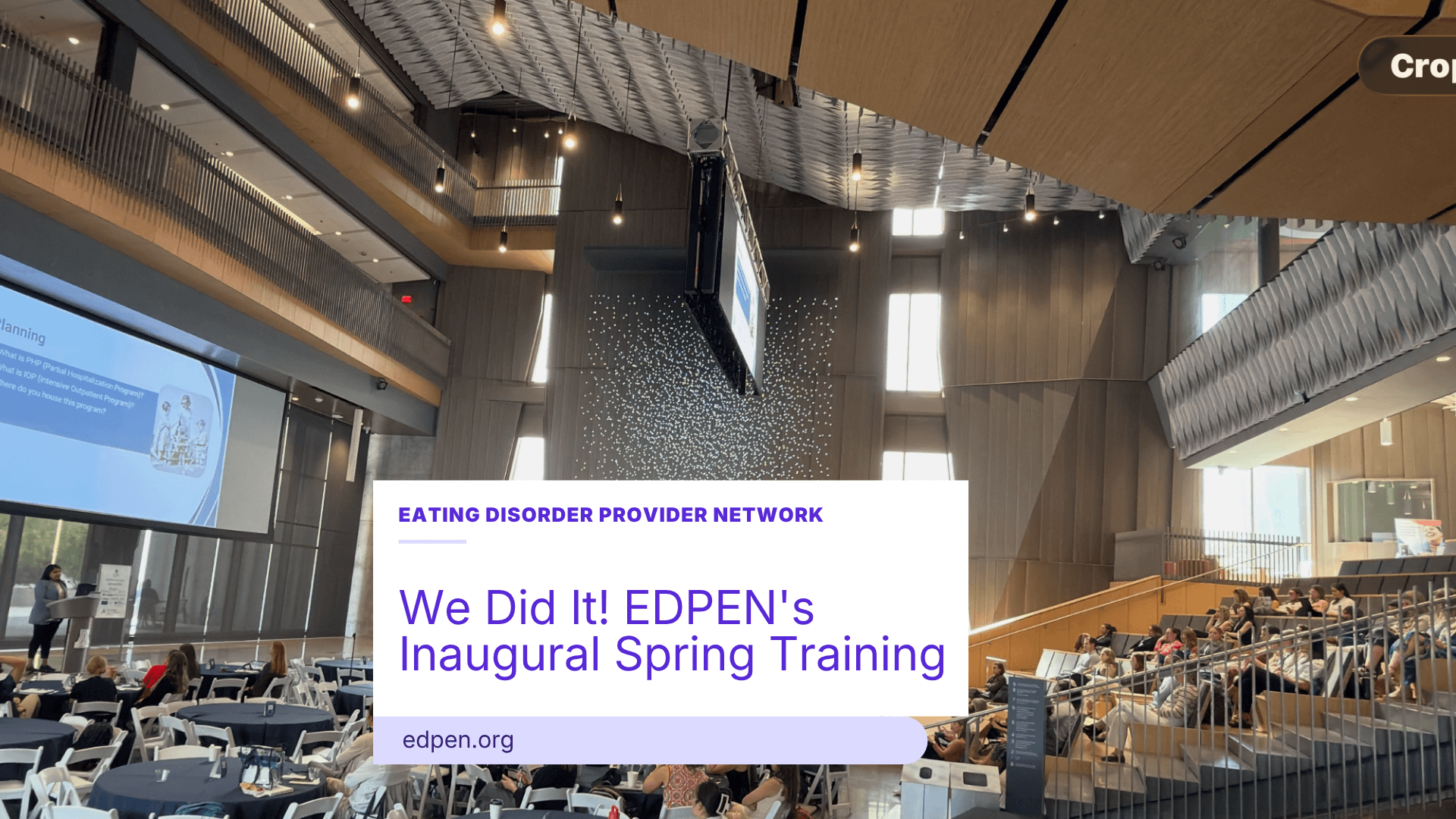
We Did It! EDPEN’s Inaugural Spring Training
EDPEN held its inaugural Spring Training at the University of Arizona, Tucson, and it was everything we hoped it would be. 115 providers from across the United States gathered for two days of immersive, interdisciplinary eating disorder education. Primary care physicians, nurse practitioners, dietitians, therapists, social workers, and recovery coaches came together to collaborate and
-
Why Eating Disorder Awareness Belongs at the Center of Adolescent Care
May is National Adolescent Health Month (NAHM). This month is an annual observance dedicated to supporting adolescents in leading healthy, fulfilling lives. NAHM highlights the interconnected domains of adolescent wellbeing: mental health, physical health, healthy relationships, and preventive care. At EDPEN, we see National Adolescent Health Month as an important moment to draw attention to
-
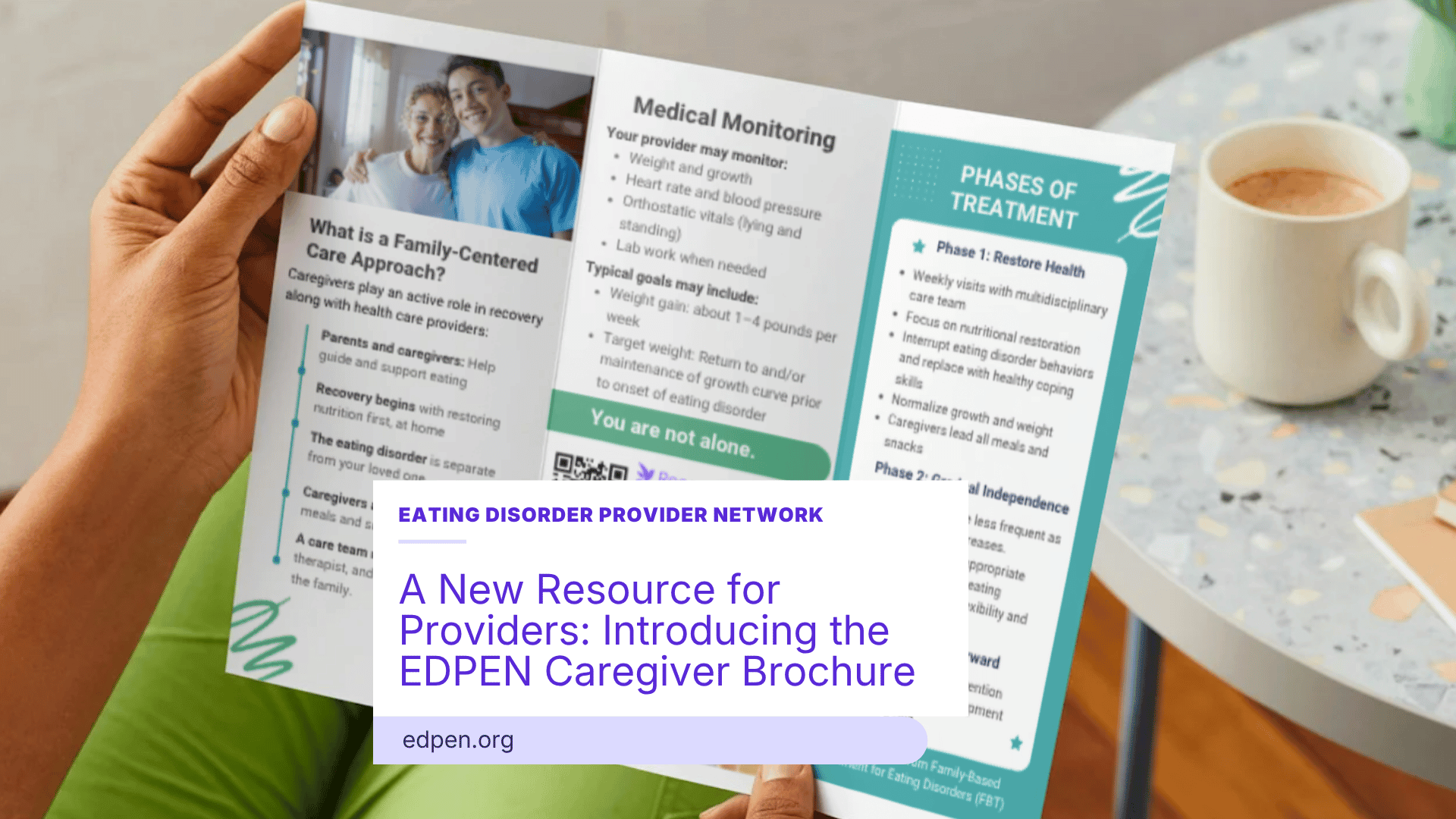
A New Resource for Providers: Introducing the EDPEN Caregiver Brochure
A free, customizable tool to help you close that first appointment with something families can actually use You’ve just told a family that their loved one may have an eating disorder. The appointment is ending. The parent across from you is trying to absorb what you’ve just said. They have questions they don’t yet know
-
The Intersection of Eating Disorders and Suicide Risk in LGBTQIA+ College Students
Content note: This post discusses eating disorders and suicide risk in clinical terms. It is intended as an educational resource for healthcare providers. If you or someone you know is in crisis, please contact the 988 Suicide and Crisis Lifeline by calling or texting 988. What the Research Shows Eating disorders and suicide risk are
-
Comparing Four Leading Approaches to Eating Disorder Treatment
A practical guide for clinicians navigating EFT, CBT, DBT, and FBT Eating disorder care has evolved well beyond one-size-fits-all treatment. Today, clinicians draw from multiple evidence-based approaches that each offer a different lens on what drives eating disorders and how recovery happens. Four of the most widely used models are Emotion-Focused Therapy (EFT), Cognitive Behavioral